
Chronological Age vs Biological Age — Key Differences Explained
You have probably heard people say, “Age is just a number.” And honestly, there is more truth to that than most people realize.
When someone asks how old you are, you give them one number — your birthday-based age. But scientists and health experts know that your body tells a completely different story. That story is your biological age, and it can be very different from the number on your birth certificate.
Understanding the difference between chronological age and biological age can change the way you think about your health, your habits, and how you are actually aging — not just on paper, but inside your body.
What Is Chronological Age
Chronological age is the simplest way to measure age. It is the exact amount of time that has passed since the day you were born — counted in years, months, and days.
This is the age you write on every form. Your passport, school records, insurance documents, and medical files all use your chronological age. It is fixed, objective, and the same for every person who shares your birth date.
How Chronological Age Is Calculated
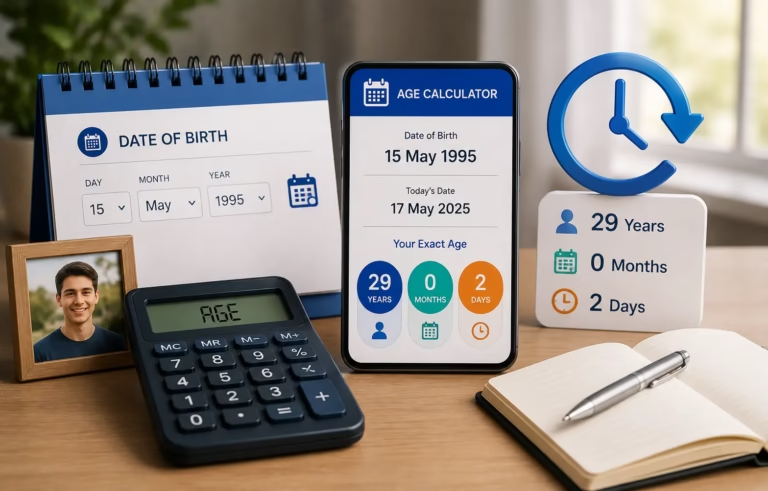
Chronological age is calculated by finding the difference between your date of birth and today’s date. A chronological age calculator does this instantly — giving you the exact result in years, months, and days without any manual math.
For example, if you were born on June 15, 1990, and today is April 2, 2026, your chronological age is 35 years, 9 months, and 17 days. This number never changes based on how you feel or how healthy you are. It only moves forward with calendar time.
Where Chronological Age Is Used
Chronological age is the standard reference in schools, hospitals, government programs, and legal systems. It determines when you can vote, drive, retire, and access age-based benefits. Medical screening schedules are also built around chronological age — for example, when to get a cholesterol check or a cancer screening.
What Is Biological Age?
Biological age is a completely different concept. Instead of measuring calendar time, it measures how well your body is actually functioning compared to what is expected for your chronological age.
Biological age — also known as physiological or functional age — differs from chronological age because it takes into consideration a number of factors beyond just the day you were born. These include your metabolism, heart health, inflammation levels, cellular condition, and overall physical fitness.
What Biological Age Really Means
Think of it this way. Two people can both be 45 years old chronologically. But one of them exercises regularly, eats well, sleeps properly, and manages stress. The other leads a sedentary life, eats poorly, and smokes. Their chronological age is identical — but their bodies are aging at completely different speeds.
For those who lead healthy and active lives, their biological age is often younger than their chronological age. For those who live sedentary lifestyles and do not prioritize their health, their biological age is likely the same or older than their chronological age.
How Biological Age Is Measured
Biological age is not measured with a single test. Researchers use several scientific methods to estimate it.
The first method is DNA methylation, which tracks chemical changes in your DNA that shift predictably as you age. The second method is telomere length measurement, which looks at the protective caps on your chromosomes — shorter telomeres generally indicate faster aging. The third method is composite biomarker panels, which combine blood test results, including inflammation markers, glucose levels, and cholesterol, into a single biological age estimate.
Key Differences Between Chronological Age and Biological Age
Both types of age tell you something important — but they serve completely different purposes. Here is a clear breakdown of how they differ.
How Each One Is Measured
Chronological age is measured purely by calendar time. You subtract the birth date from the current date, and the result is fixed. An online age calculator can give you this number in seconds with full accuracy.
Biological age is measured through scientific testing — blood panels, genetic markers, and physical assessments. The result can vary depending on which method is used, and it is not available through a standard age calculator.
What Each One Reflects
Chronological age reflects time. It tells you how long you have been alive — nothing more and nothing less.
Biological age reflects health. It tells you how efficiently your body functions, how quickly your cells age, and your risk of age-related diseases.
Can You Change It
Chronological age cannot be changed. Every person ages at the same rate on the calendar — one year per year, no exceptions.
Biological age can be influenced. Through consistent lifestyle improvements — better diet, regular exercise, quality sleep, and stress management — many people have brought their biological age below their chronological age.
How It Is Used
Chronological age is used for all official and legal purposes — school enrollment, retirement benefits, insurance, and medical protocols. It is the standard because it is objective and consistent.
Biological age is used in health research, longevity planning, and personalized medicine. It helps doctors and health professionals understand your actual risk for disease, beyond what your birth year alone can reveal.
Why the Gap Between the Two Matters
The difference between your chronological age and biological age is sometimes called the age gap. This gap is one of the most useful signals in modern health science.
When someone has a biological age lower than their chronological age, it suggests their body is aging more slowly than average. A biological age higher than chronological age indicates accelerated aging and potentially increased risk for age-related diseases.
This gap does not label you as healthy or unhealthy. It simply shows which direction your body is moving — and gives you the information you need to make better decisions.
Real Life Example Same Age, Different Bodies
Here is a practical example that makes this easy to understand.
Person A is 50 years old chronologically. They exercise five days a week, eat a balanced diet, sleep eight hours, and do not smoke. Their biological age, based on testing, is approximately 38 years.
Person B is also 50 years old chronologically. They have a sedentary lifestyle, eat processed food regularly, sleep poorly, and have been smoking for 20 years. Their biological age testing shows approximately 63 years.
Both people are the same chronological age. But their bodies are at completely different stages of aging. This is exactly why health experts say that chronological age alone does not tell the full story.
Which One Should You Focus On
Both ages matter — but for different reasons.
Your chronological age is important for legal documents, official records, and medical protocols. You cannot change it, and you do not need to. Our calculators give you this number accurately whenever you need it.
Your biological age is important for your personal health decisions. It shows you where you stand today and what lifestyle changes can actually slow down how fast you are aging on the inside.
The smartest approach is to know both. Use your chronological age for official purposes, and use your biological age as a personal health guide.
How to Start Taking Your Biological Age Seriously
You do not need expensive testing to start improving your biological age. Small, consistent changes make a real difference over time.
The first step is regular physical activity. Even 30 minutes of walking daily has been shown to support healthier cellular aging. The second step is a nutrient-rich diet — foods high in antioxidants, fiber, and healthy fats help protect your cells from damage. The third step is quality sleep — poor sleep consistently raises biological age over time. The fourth step is stress management — chronic stress raises inflammation levels, which directly accelerates biological aging. The fifth step is avoiding smoking and excess alcohol — both are among the fastest ways to raise your biological age above your chronological age.
Final Thoughts
Chronological age and biological age are not the same thing — and understanding the difference gives you a real advantage.
Your chronological age is fixed, objective, and easy to calculate. Use a free online age calculator to find your exact age in years, months, and days whenever you need it.
Your biological age, on the other hand, is something you can influence. With the right habits and consistent effort, many people live with a biological age that is years younger than what their birth certificate says.
The calendar counts your years. Your lifestyle determines how those years actually feel.