Fertile Window Calculator: Find Your Fertile Days to Get Pregnant
If you are trying to conceive, knowing your fertile window is more important than knowing your ovulation date alone. Your fertile window is the period of days each cycle when pregnancy is actually possible, and it is wider than most people realize. Understanding exactly which days fall within your fertile window, and which days within it give the highest probability of conception, is the key to timing intercourse effectively.
A fertile window calculator identifies these days based on your cycle length and last period date. This guide explains what the fertile window is, how it is calculated, what makes certain days more fertile than others, and how to use this information to give yourself the best possible chance of getting pregnant each cycle.
What Is the Fertile Window?
The fertile window is the set of days in your menstrual cycle during which having intercourse can result in pregnancy. It exists because of two biological facts working together: the egg survives for only 12 to 24 hours after ovulation, and sperm can survive inside the reproductive tract for up to 5 days.
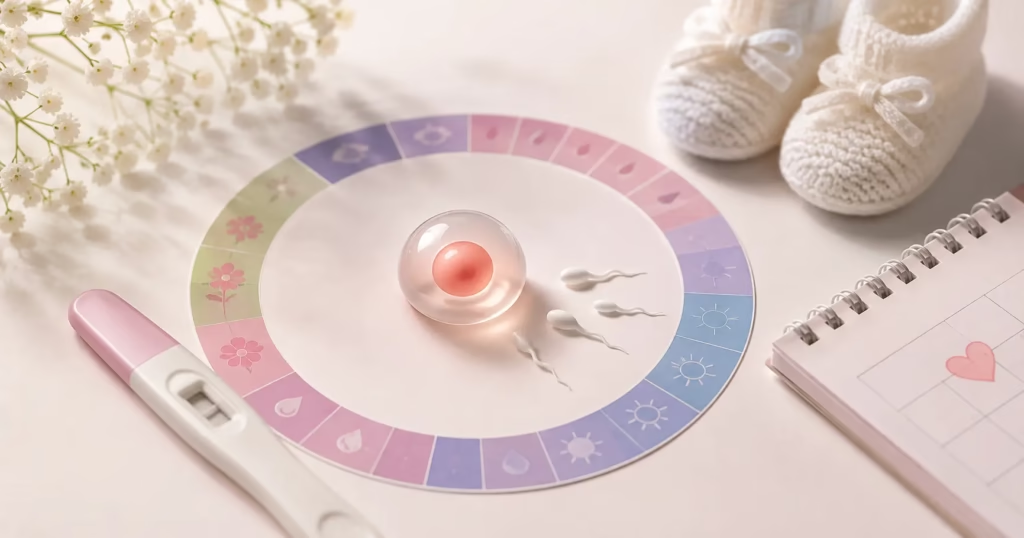
Because sperm can survive for several days, intercourse does not have to happen exactly on ovulation day to result in conception. Sperm present in the fallopian tubes before ovulation can fertilize the egg when it is released. This biological reality extends the window of opportunity beyond just ovulation day and creates the fertile window that a fertile days calculator identifies.
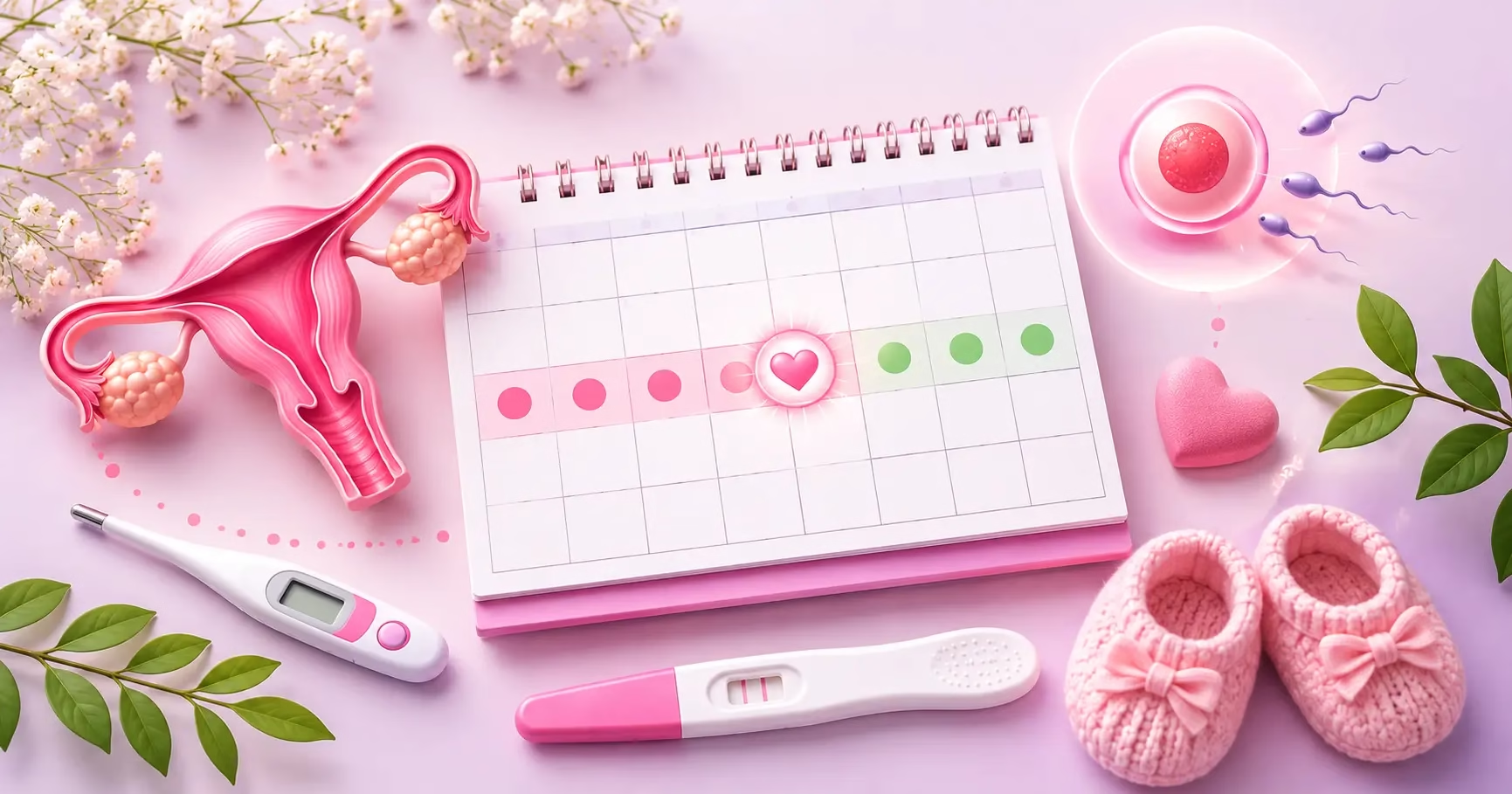
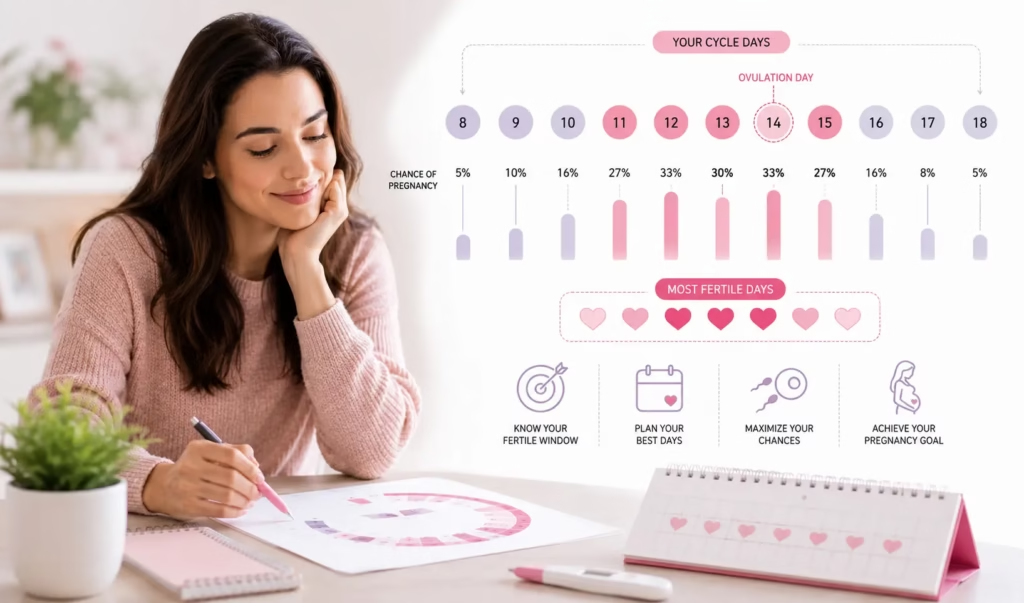
The fertile window typically spans six days per cycle: the five days before ovulation and ovulation day itself. Within this window, not all days are equally fertile. The probability of conception increases as ovulation approaches and peaks on the day before ovulation and ovulation day itself.
How a Fertile Window Calculator Works
A fertile window calculator uses two pieces of information to identify your fertile window: the first day of your last menstrual period and your average cycle length.
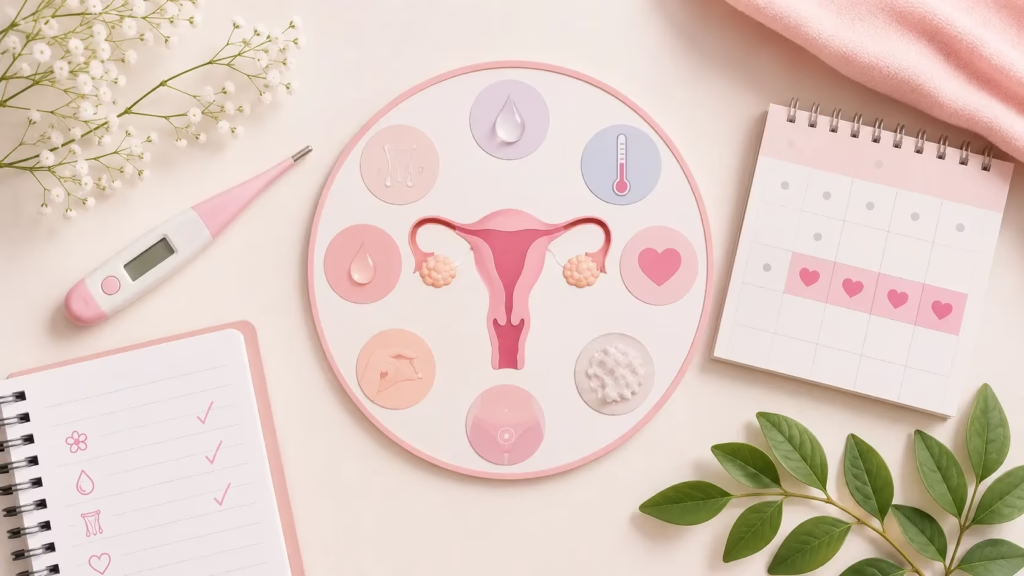
From these inputs, our calculator first estimates your ovulation date. It does this by subtracting 14 days from your expected next period date, which is found by adding your cycle length to your last period start date. Once the ovulation date is established, the calculator identifies the five days before it and ovulation day itself as your fertile window.
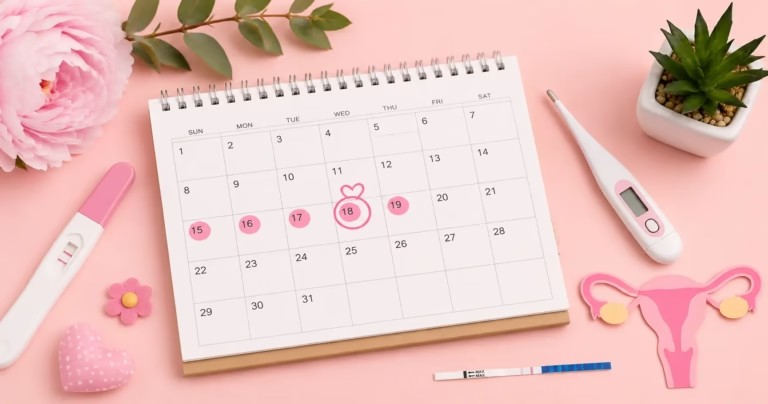
For example, if your last period started on April 1 and your cycle is 28 days, your next period is expected around April 29. Subtracting 14 days gives April 15 as the predicted ovulation date. Your fertile window runs from April 10 to April 15.
The most fertile days within this window are April 13, April 14, and April 15, which are the two days before ovulation and ovulation day itself.
Fertile Days Calculator — Probability of Conception by Day
Not every day in the fertile window carries the same probability of conception. Understanding the relative fertility of each day helps you prioritize timing when daily intercourse is not possible.
Five Days Before Ovulation
The probability of conception from intercourse five days before ovulation is low but real. Sperm can survive this long under ideal conditions, but many will have died or lost motility by the time the egg is released. This day represents the outer edge of the fertile window.
Four Days Before Ovulation
The probability increases slightly compared to five days before. Sperm survival rates are better, and there is a meaningful but still relatively low chance of conception.
Three Days Before Ovulation
Three days before ovulation, conception probability increases more noticeably. Sperm deposited on this day have a reasonable chance of surviving until ovulation.
Two Days Before Ovulation
Two days before ovulation is one of the two peak fertility days in the cycle. Sperm deposited on this day have an excellent survival rate and are well-positioned in the fallopian tubes when the egg is released.
One Day Before Ovulation
The day before ovulation is the other peak fertility day. Sperm are optimally timed for the egg’s arrival, and survival rates are at their highest. Intercourse on this day gives one of the highest individual-day probabilities of conception in any cycle.
Ovulation Day
Ovulation day itself is the final day of the fertile window. The egg is available for fertilization for 12 to 24 hours. Intercourse on this day has a high probability of conception when sperm are already present from earlier intercourse or are introduced on the same day.
Day After Ovulation
The day after ovulation carries a very low probability of conception because the egg survives for only 12 to 24 hours. By this point, the egg has typically already degenerated if unfertilized. The fertile window effectively closes after ovulation day.
Fertile Period Calculator — Your Fertile Window by Cycle Length
The dates of your fertile window shift based on your cycle length. Here is how the fertile window changes for different cycle lengths, all using April 1 as the last period start date.
21-Day Cycle
Ovulation predicted: Day 7, approximately April 8. Fertile window: April 3 to April 8. Peak days: April 6, April 7, and April 8.
25-Day Cycle
Ovulation predicted: Day 11, approximately April 12. Fertile window: April 7 to April 12. Peak days: April 10, April 11, and April 12.
28-Day Cycle
Ovulation predicted: Day 14, approximately April 15. Fertile window: April 10 to April 15. Peak days: April 13, April 14, and April 15.
30-Day Cycle
Ovulation predicted: Day 16, approximately April 17. Fertile window: April 12 to April 17. Peak days: April 15, April 16, and April 17.
35-Day Cycle
Ovulation predicted: Day 21, approximately April 22. Fertile window: April 17 to April 22. Peak days: April 20, April 21, and April 22.
This demonstrates clearly why knowing your personal cycle length matters. A woman with a 35-day cycle has her peak fertility days more than two weeks later in the calendar than a woman with a 21-day cycle, even if both periods started on the same day.
Best Days to Get Pregnant — Maximizing Your Chances Each Cycle
Knowing your fertile window is only part of the picture. Using that window effectively requires understanding the optimal timing strategy for intercourse.
The Every-Other-Day Approach
Having intercourse every other day throughout your fertile window is one of the most consistently recommended strategies. This approach ensures that fresh sperm are present throughout the entire fertile window without causing fatigue or stress around timing. Starting intercourse about five days before your predicted ovulation date and continuing through ovulation day covers the complete fertile window with this approach.
The Peak-Day Focus Approach
If daily or every-other-day intercourse throughout the full window is not possible, focusing on the two to three peak days gives the highest probability from a smaller number of acts of intercourse. The two days before ovulation and ovulation day itself are the three highest-probability days of the entire cycle. Prioritizing these days when constraints require a more targeted approach is a reasonable and evidence-based strategy.
Why Timing Matters More Than Frequency
Having intercourse very frequently throughout the month does not improve conception chances if intercourse is not occurring during the fertile window. Outside the fertile window, pregnancy is not possible regardless of how frequently intercourse occurs. Timing within the fertile window matters far more than overall frequency.
Fertile Window Calculator — Physical Signs That Confirm Your Window
A fertile window calculator gives you a calendar prediction. Physical signs from your own body help confirm when your fertile window is actually open each cycle.

Cervical Mucus Changes
Cervical mucus is one of the most reliable indicators of approaching ovulation. In the days before ovulation, as estrogen levels rise, cervical mucus becomes more abundant, clearer, and stretchier. At peak fertility, it has a consistency similar to raw egg white, stretching between the fingers without breaking. This type of mucus is sometimes called egg white cervical mucus and indicates that ovulation is approaching or occurring.
After ovulation, progesterone causes cervical mucus to become thicker, stickier, and less abundant. The change from fertile to non-fertile mucus usually happens within one to two days after ovulation.
Basal Body Temperature Shift
Basal body temperature, measured first thing in the morning before any activity, rises slightly after ovulation has occurred. The rise is typically between 0.2 and 0.5 degrees Celsius and is caused by the progesterone produced after ovulation. Seeing this rise confirms that ovulation has happened, though it cannot predict it in advance.
Tracking basal body temperature over several cycles allows you to identify the pattern of when in your cycle the temperature shift occurs, helping you anticipate your fertile window more accurately in future cycles.
Ovulation Predictor Kit Results
Ovulation predictor kits detect the surge in luteinizing hormone that triggers ovulation. A positive result on an ovulation predictor kit indicates that ovulation is expected within approximately 24 to 36 hours. This gives you advance notice of intercourse during the highest-probability days of your cycle.
Using an ovulation predictor kit during the days around your predicted fertile window confirms whether your calculated fertile window matches what your body is actually doing in that specific cycle.
Fertile Window vs Ovulation Day — Understanding the Difference
Many women focus entirely on ovulation day and miss the broader opportunity that the fertile window provides. Understanding the difference between the two helps you approach conception timing more effectively.
Ovulation day is the single day when the egg is released. The egg is viable for only 12 to 24 hours on this day. If no sperm are present when the egg is released, conception cannot occur.
The fertile window is the six-day period that includes five days before ovulation and ovulation day. It exists because sperm can survive inside the reproductive tract for several days, meaning intercourse before ovulation can still result in conception when the egg is released later.
Focusing only on ovulation day puts all of the pressure on a single point in time and requires near-perfect timing. Using the full fertile window gives you multiple opportunities across several days and significantly reduces the pressure of hitting a single target.
Our free ovulation calculator identifies your full fertile window every cycle, not just your predicted ovulation date, so you always have the complete picture of your most fertile days.
Questions About Fertile Window Days
Use our free ovulation calculator to find your fertile window and best days to get pregnant every cycle instantly.
Medical Disclaimer
This guide provides general information about the fertile window and is intended for educational purposes only. Results from any fertile window calculator are estimates based on average cycle patterns and should not replace professional medical advice. Consult a qualified healthcare provider for personalized fertility guidance.