
Is Your Aquarium Overstocked? Check These 9 Signs First
An overstocked aquarium often looks perfectly normal until it suddenly does not. Fish keep eating, the water looks clear, and everything seems fine, right up until nitrate spikes, a fish gets sick, or the filter starts clogging every few days. Learning to recognize the early warning signs before things go wrong is far easier than fixing a tank after it has already crashed.
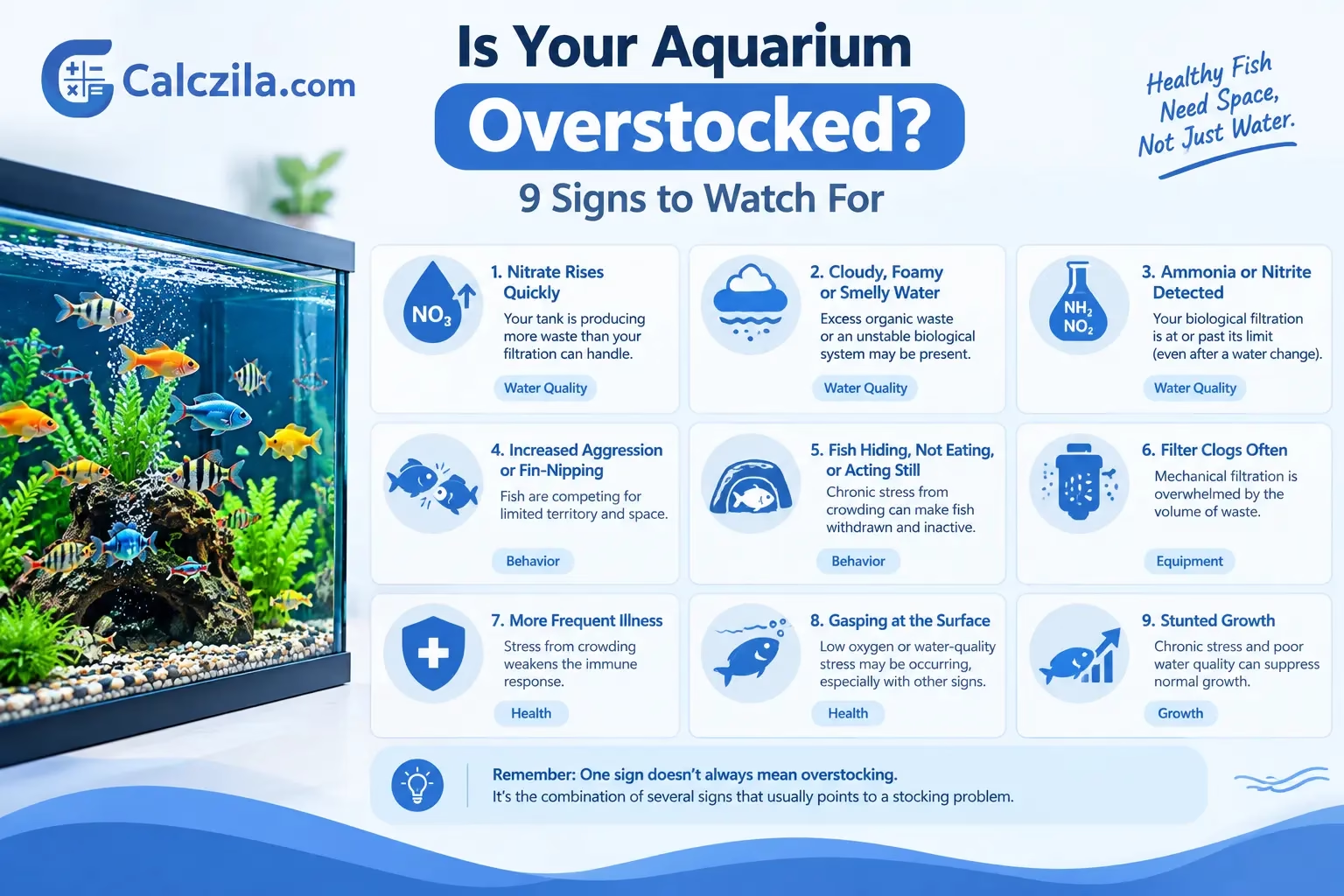
Why Overstocking Is Easy to Miss
Overstocking rarely happens all at once. It usually builds gradually, one impulse fish purchase or one unexpectedly large adult size at a time. Because the changes are slow, many aquarium owners do not notice their tank has crossed the line until multiple warning signs show up together. That is exactly why it helps to know what to look for rather than relying on gut feeling alone.
Not every sign points to overstocking on its own. A single fish gasping at the surface, for example, could just mean the water is too warm. It is the combination of several of these signs appearing around the same time that usually points to a stocking problem rather than an isolated issue.
How Fast Do Overstocking Symptoms Show Up
This varies a lot depending on how far past capacity the tank is. Adding one fish slightly beyond a comfortable stocking level might take weeks or months to show any visible signs, since the tank’s filtration and water changes can still mostly keep up. A tank that is significantly overstocked, such as several adult-sized fish added to a tank that was already near its limit, can show water quality problems within days.
Water testing tends to catch the problem earlier than visual symptoms do. Rising nitrate or occasional ammonia readings after feeding often appear well before fish show any outward signs of stress, which is one reason regular testing matters even when everything looks fine.
Can Strong Filtration Hide the Problem?
To a point, yes, and this is part of why overstocking can be so easy to miss. A powerful filter can process waste fast enough to keep ammonia and nitrite at zero even in a tank that is carrying more fish than it comfortably should. What filtration cannot fix is swimming space, oxygen availability at the water’s surface, or the territorial stress that comes from too many fish sharing too little room.
This is why water test results alone do not always tell the whole story. A tank can pass every water test and still show behavioral signs of overstocking, like constant chasing or fish that never fully relax. If you are unsure where your tank actually stands, it helps to run a quick stocking check based on your tank size, fish species, and adult sizes rather than relying on water tests alone.
What To Do If Your Tank Is Overstocked
- Increase the frequency or volume of water changes to help keep pace with waste output
- Hold off on adding any new fish until the situation stabilizes
- Consider rehoming one or two fish, especially faster-growing or more aggressive species, rather than trying to manage the whole group long term
- Add live plants where possible, since they can help absorb some nitrate between water changes
- Retest your water more frequently for a few weeks to confirm the situation is improving rather than assuming it is fixed
Reducing stocking is almost always a more reliable fix than trying to out-filter or out-clean an overstocked tank. Strong maintenance can buy time, but it does not remove the underlying cause.
If you are keeping a saltwater or reef tank, stocking level is only one part of the picture. Our salinity converter and calcium and alkalinity calculator can help you keep the rest of your water chemistry stable while you work on getting your stocking level right.
Frequently Asked Questions
Final Thought
Most overstocked tanks do not fail overnight, they drift there gradually, which is exactly why the early signs matter. If several of these signs sound familiar, it is worth running a proper stocking check before making any changes, and if you are just starting out, working from a solid beginner’s guide from day one is the easiest way to avoid ending up here in the first place.